Loy O'Kelley is a combat-injured U.S. Army Infantry retiree and the founder of Standfast Veterans Group. He earned the Combat Infantryman Badge and deployed twice to Afghanistan. When it came time to file for Combat-Related Special Compensation, he did what he now does for clients: he built the packet himself — all 277 pages of it — and learned exactly what a branch CRSC board needs to see before it can say yes.
The infantry, two deployments, and a 277-page packet
Loy served as a U.S. Army Infantryman with two deployments to Afghanistan, and he carries the injuries that came with that service. After retiring, he ran headfirst into the same wall most combat-injured retirees hit: a VA offset quietly taking back the retired pay he had earned, and a CRSC process that approves only what the paper proves.
So he treated his own claim like a mission. He pulled every record, mapped every condition to a qualifying combat-related event, and assembled a 277-page CRSC packet built to the board's standard — the causation chain documented link by link, not asserted. That build became the blueprint for every packet Standfast prepares today, and the basis for his book, The CRSC Playbook, available on Amazon.
Why Standfast exists
Standfast Veterans Group exists because most CRSC denials aren't really about eligibility — they're about documentation. Loy founded the company to give military retirees the same standard of packet he demanded for himself: the full causation narrative, the right combat-related category for each condition, and a DD Form 2860 the board can verify line by line.
- Vet to vet. Loy personally reviews and signs off on every client packet. No call centers. The people who build it are on this page.
- Flat fee, never a percentage. Some companies take a cut of your retroactive CRSC — thousands of dollars off the top of money you earned. Standfast charges a flat fee you know up front: records review ($600), full packet preparation ($3,000), reconsideration ($1,800). Pay in full with any major card, or split it at checkout with Affirm or Klarna, subject to their approval.
- Straight answers. If a packet isn't worth your money, Loy tells you on the free call — before you spend a dollar.
Credentials & experience
- U.S. Army Infantry retiree, combat-injured · Combat Infantryman Badge · two Afghanistan deployments
- Filed his own 277-page CRSC packet — the model for every Standfast client build
- Author of The CRSC Playbook (available on Amazon)
- Founder & CEO, Standfast Veterans Group — a federally certified Service-Disabled Veteran-Owned Small Business (SDVOSB)
- Prepares CRSC packets for retirees of every branch, assembled to each board's format
What Loy is not
Straight talk, because that's the house style: Loy is not a lawyer, and Standfast Veterans Group is not a law firm and does not provide legal, tax, or financial advice. Standfast is not affiliated with the VA, DoD, DFAS, HRC, or any branch of the Armed Forces, and nobody here will ever guarantee you an approval, a rating, or a backpay number — no one honestly can. What you get is the strongest documented case your records support, built by someone who has carried a packet like yours through the process himself.
I retired from military service after serving as both enlisted and officer in the U.S. Army, with two combat tours in Afghanistan, a Combat Infantryman Badge, and eighteen VA-rated conditions from those years.
When I sat down to file my own CRSC packet, I learned exactly how brutal the process is, and how easy it is to lose tens of thousands of dollars to a single weak narrative or missing enclosure. So I built the packet the way it should be built. 277 pages. Every condition documented. Every causation chain proved.
Standfast exists because the next retiree shouldn't have to figure it out alone. We bring that same discipline to your packet, vet to vet, plain-spoken, no shortcuts.
"Standfast" is a military command. It means hold your position. Don't break. We named the company after it because that's the posture you need when you're up against a system that makes denial the path of least resistance.
The Standfast team
A combat-injured Infantry retiree who built his own CRSC application from the ground up. A 25-year enterprise change-management leader with Dell and ExxonMobil program scope exceeding $500M. A 20-year Army retiree who spent his career in the middle seat between the government and its contractors, finding the facts and getting both sides heard. A doctorally-trained nurse practitioner whose nexus letters bridge medical evidence and disability law. Four skills your packet needs: lived expertise, operational rigor, the right questions asked, and clinical credibility.

Robert Kelley
Robert's career has been spent on a single throughline: helping people navigate complex, high-stakes transitions they didn't ask for. At Dell and ExxonMobil, that meant $500 million in enterprise transformation programs touching 100,000+ employees across 30+ countries. At Standfast, it's the same craft applied at a much more personal scale, one combat-injured retiree at a time, walking through what your service is owed and how to actually recover it.
At Standfast, Robert leads Case Development. Once we know what your record holds, he owns what gets built from it: how the evidence is sequenced, which documents carry the causation argument, where a file is thin and what it will take to close the gap before it reaches a reviewer. The same discipline that kept billion-dollar deployments on track now anchors a single retiree's packet: a structured evidence plan, a build schedule that doesn't slip, and a steady cadence of updates while your board adjudicates.
"You don't manage a $500 million deployment by hoping it works out. You don't file a CRSC packet that way either."
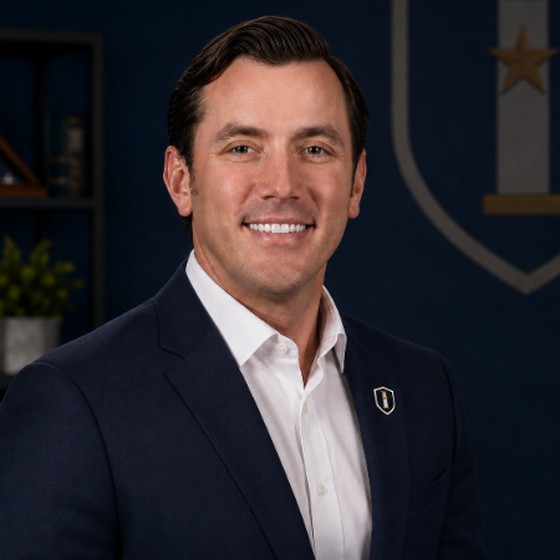
Brandon Barber
Brandon spent twenty years in the U.S. Army and retired having served across the full range of what the Army asks of a career soldier: combat deployments, base support operations, and finally logistics, where the work is measured in whether the right thing reaches the right people on time.
His final years were spent in contracting and acquisition, sitting between the U.S. government and its civilian contractors. That seat is negotiation and mediation in equal measure: two parties under different pressures, a contract's worth of detail between them, and someone in the middle whose job is to establish the facts, get both sides heard, and land it on terms that hold. It's where Brandon found the work he's best at: people, and the resolution of conflict.
At Standfast, Brandon leads Client Relations. He's the one who sits with you and draws the record out: the deployment you'd stopped mentioning, the injury you wrote off as part of the job, the line in your file you never thought mattered. Those details are what decide a CRSC case, and most retirees don't volunteer them, because nobody has ever asked the right question. Brandon asks. Then he tells you straight how strong your case actually is.
"Most retirees undersell their own record. My job is to keep asking until we find what's actually in there."
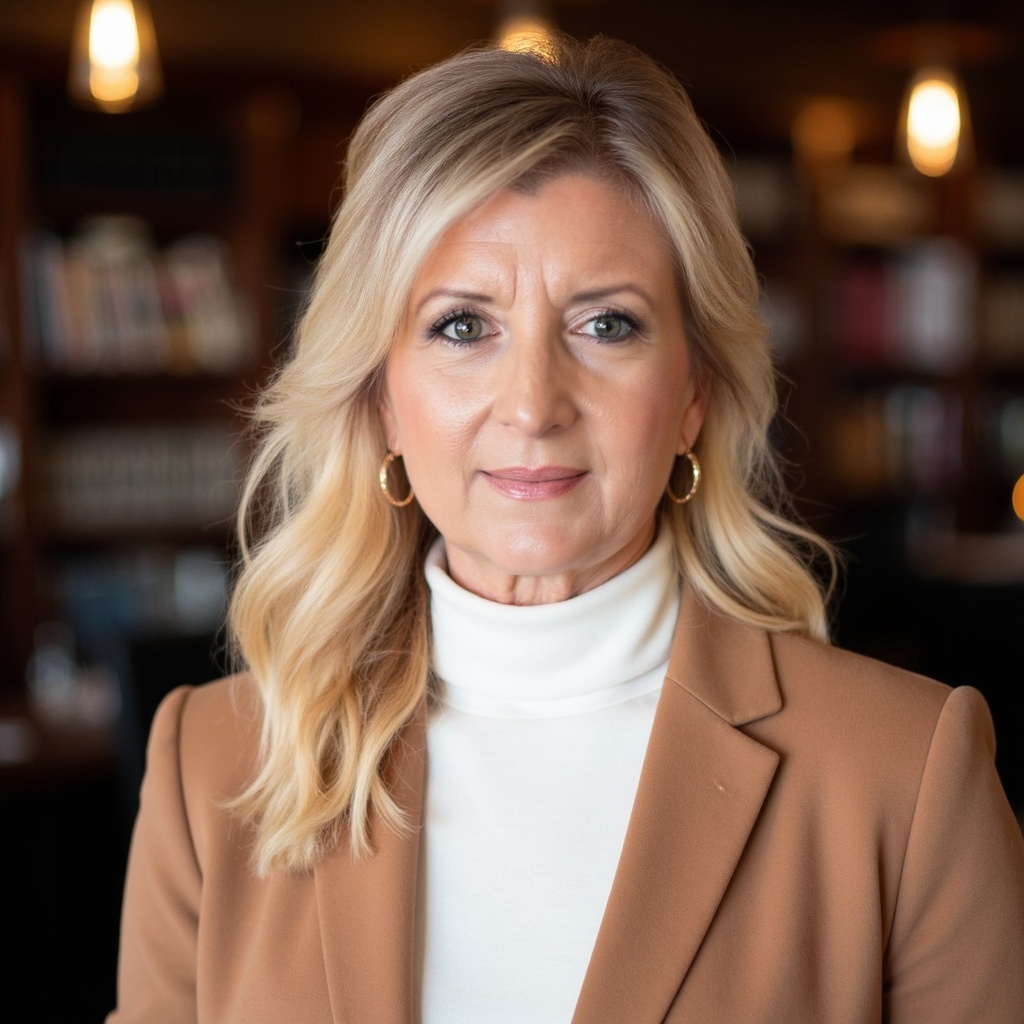
Dr. Carrie Caldwell Johnson, DNP, APRN, FNP-c
Dr. Johnson brings more than 26 years of clinical practice as a Family Nurse Practitioner and Doctor of Nursing Practice to Standfast's leadership. She is a Clinical Assistant Professor at the University of Texas at Austin and the owner of Caldwell-Johnson PLLC, a medical-legal consulting practice based in Waco, Texas. Her academic appointments have included Texas A&M University and the University of Mary Hardin-Baylor.
Her clinical specialty is the place where medicine meets disability law: comprehensive medical evaluations to determine service-connected disabilities, independent medical opinions, record reviews, and the medical "Nexus" letters that establish the link between a veteran's current condition and their service. Her academic specializations in chronic disease, disability, and genetics anchor every opinion she provides in current evidence-based practice.
As Chief Nursing Officer, Dr. Johnson currently advises on the medical evidence and clinical narrative components of Standfast's CRSC packets, making sure the medical story in your file is as defensible as the legal one. As Standfast expands into VA disability claims preparation, her clinical leadership and nexus-letter expertise will anchor that practice line.
A strong CRSC or VA packet doesn't just need the right forms. It needs medical evidence that a clinician would defend, written in the language a reviewer is trained to look for. That's the standard Dr. Johnson sets.
What clients say
Every name below has given written consent to be quoted. First name and last initial only, with branch and years of service for context. We don't share case-specific dollar figures unless the client asks us to.
"I'd been losing $2,300 a month to the VA Waiver for nine years and didn't know there was a way to get it back. Loy walked me through CRSC in fifteen minutes on a phone call, told me straight he thought I had a case, and then his team built the packet exactly the way he said they would. Approved on the first round. The backpay alone changed what retirement looks like for me and my wife."
"I'd been on CRDP for six years and assumed CRSC wasn't worth the paperwork. Robert spent twenty minutes on my intake call running the tax math out loud. Turned out CRSC netted me more even before the backpay. Standfast's flat fee was less than one month of what the percentage firms wanted to charge me. Clean process. Honest people."
"I got medically retired at eight years and figured CRSC was for the 20-year guys. The free consult was the first time anyone explained that I was actually eligible. What sold me on Standfast was the Records Handling page. They named the three people who would see my files and exactly how they'd be stored. Nobody else I called could answer that question." [The team is now four people.]
"First firm I hired took 30% of what they promised in backpay and submitted a packet that got denied flat. Standfast charged me a flat $1,500 for reconsideration, rebuilt the causation narratives from scratch, and the board approved on the second look. I wish I'd called them first." [2025 rate.]
"The VA Waiver had taken my retired pay down to almost nothing, and I figured that was just the way it worked. Standfast proved every one of my combat-related conditions and the board approved it: about $1,800 a month, tax-free, for the rest of my life. I tell every retiree I know to call Loy before they do anything else."
"Twenty-plus years in and already on CRDP, I assumed there was nothing left to claim. Standfast ran the math and built the CRSC packet that made my retirement tax-free: roughly $14,000 a year that stays in my pocket now instead of going to taxes. Flat fee, never a percentage, and they treated a colonel and a young sergeant exactly the same."
Individual results vary. CRSC outcomes are determined by your service branch's CRSC board. Standfast does not guarantee approval, rating percentage, or backpay amount. Quotes published with written consent; some names changed at the client's request.
Talk to Loy's team — free, vet to vet.
A free 15-minute review gets you a straight, experience-based read on your CRSC situation. Or take the 30-second quiz and see where you stand first.